What’s Killing Your Chlorine? 5 Things That Can Destroy Your Pool’s Sanitizer
You add chlorine, test the water a few hours later… and somehow, your chlorine is already gone. Sound familiar?
Before you keep adding more and more chlorine, it’s important to understand what could be using it up or making it less effective.
Here are a few of the biggest culprits:
-
High Phosphates
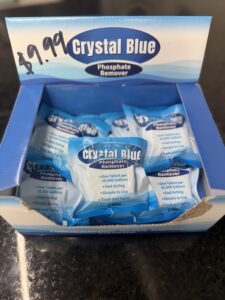
Phosphates are food for algae. When phosphate levels get too high, your pool can become much more prone to algae growth—and your chlorine has to work overtime trying to keep up.
The result? Your sanitizer can disappear quickly, especially when algae is beginning to grow.
Tip: Test your phosphates regularly, especially if you have a history of algae problems.
-
High pH
When your pH gets too high, chlorine becomes less effective. You may have plenty of chlorine in the water according to your test, but it isn’t working as efficiently as it should.
Keeping your pH in the proper range helps your chlorine do its job.
Tip: Don’t just test chlorine—always test and balance your pH, too!
-
Low CYA (Stabilizer)
CYA, also known as stabilizer or conditioner, protects chlorine from being destroyed by the sun’s UV rays.
If your CYA is too low, the sun can burn through your chlorine quickly.
Think of CYA as sunscreen for your chlorine!
-
Too Much CYA
Yes… CYA can be too low AND too high!
While stabilizer protects chlorine from the sun, excessive CYA can make chlorine less effective and requires you to maintain higher chlorine levels to properly sanitize the pool.
This is especially common in pools that regularly use trichlor tablets or dichlor shock, since both add CYA.
Tip: Always test your CYA before automatically adding more chlorine.
-
Algae & Contaminants
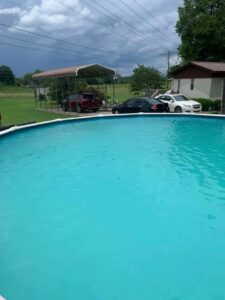
Chlorine doesn’t just sit around waiting for swimmers—it is constantly fighting contaminants in your water.
Leaves, pollen, dirt, sunscreen, body oils and, especially, algae all create a chlorine demand.
If your pool has algae starting to grow, your chlorine may disappear surprisingly fast because it’s being consumed while fighting the problem.
The Bottom Line
If your chlorine keeps disappearing, don’t just keep adding more!
There may be an underlying water-balance problem.
Bring us a water sample and let us test it! We can check your chlorine, pH, CYA, phosphates and other important levels to help determine what’s eating up your chlorine—and how to get your pool back on track.